About
A scientist who reads the data the way your reviewers will, and a strategist who knows what to do next.
The source of truth lives inside the primary literature and the raw analysis, not the summary slide. My research applies functional connectivity analysis and machine-learning classification to subcortical signals in epilepsy and neuropsychiatric disease, asking a hard question: when does a brain signal actually distinguish one clinical phenotype from another, and when is it noise dressed as insight. That work is published in Neurology, Brain Imaging and Behavior, and Epilepsia, with a fourth manuscript in preparation.
The through-line matters more than the indication. Neurological and neuropsychiatric conditions often present through overlapping signs and semiology, and asking the right question in the right context is what separates a shared surface pattern from a shared underlying mechanism. That distinction is where a candidate marker earns, or fails to earn, a therapeutic rationale. It is the same judgment whether the asset is an epilepsy program or something adjacent.
The same discipline carries across the development arc. I hold candidate markers to a validation standard, I look for the leakage and overfitting that inflate a classifier, and I separate the technically adequate from the clinically overstated. Twenty-five years across sponsor and CRO, at Merck, CSL Behring, IQVIA, and Syneos, means I read the science with an eye on what a board, a regulator, and a market will each need to see, and I can translate that judgment into an evidence plan, a launch strategy, or a study that will actually run.
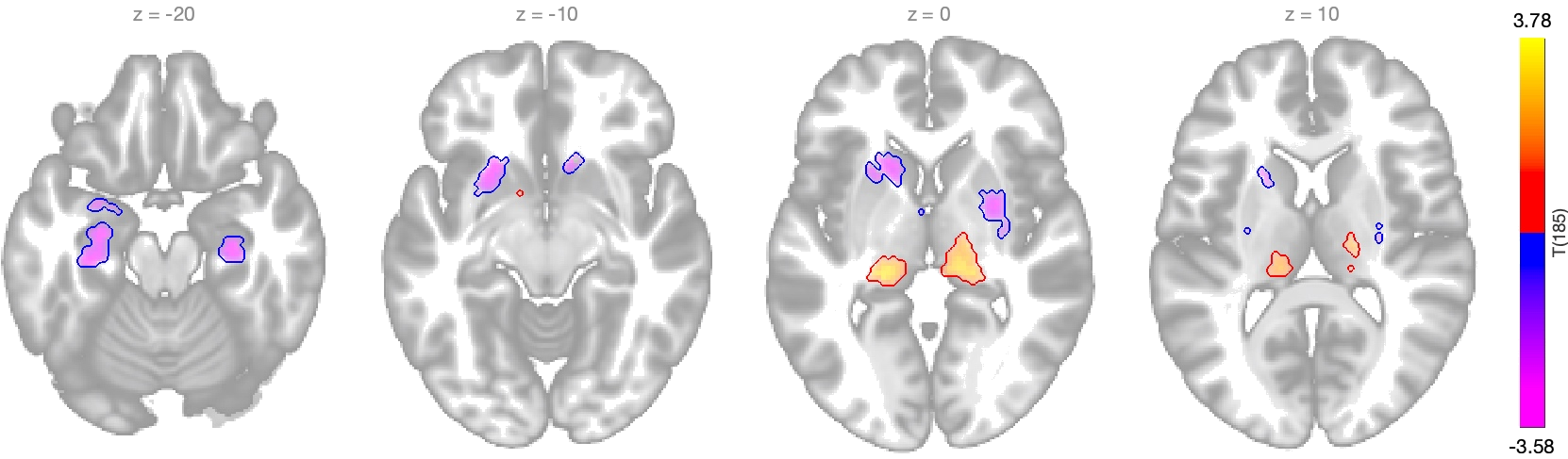
Novel subcortical features discriminating FBTCS severity via SVM classification
In preparation · Nested cross-validation, permutation testing, convergent feature analysis